
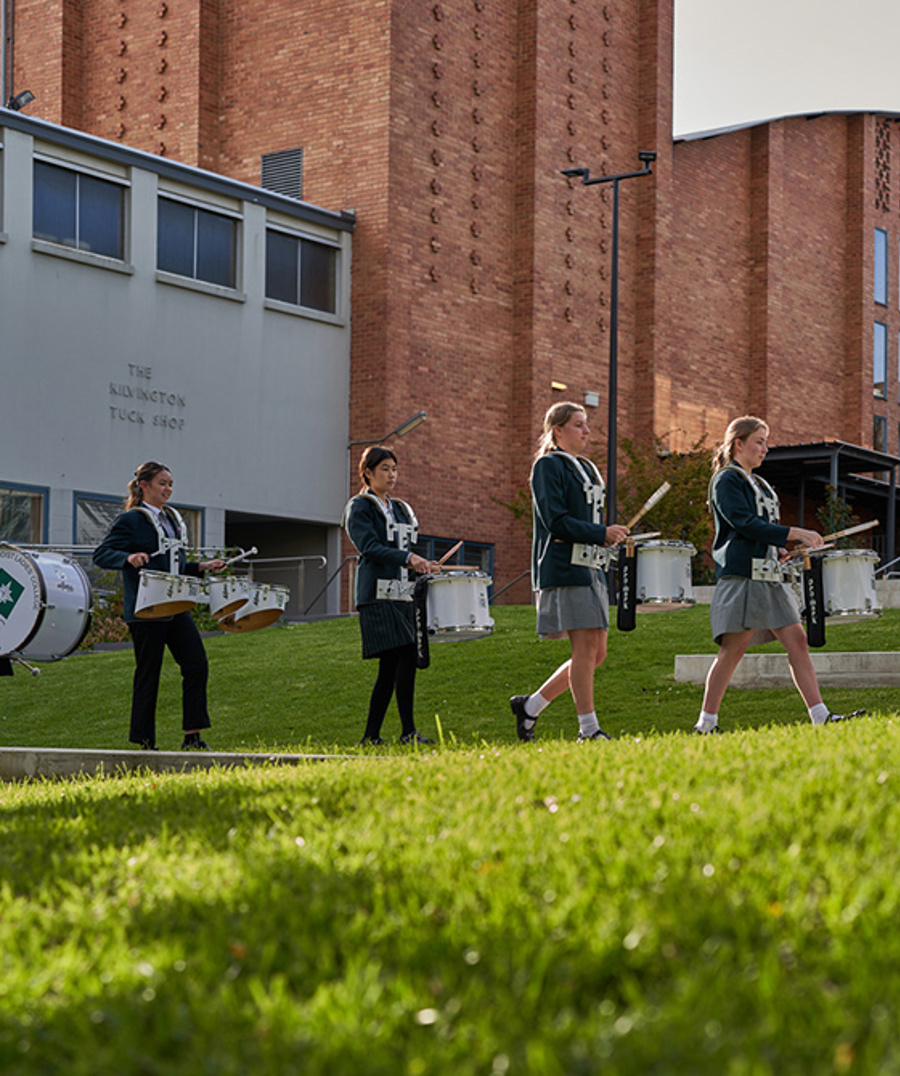

What is the IB Diploma? Exploring the IB at MLC
August 14th, 2026

August 14th, 2026
The International Baccalaureate (IB) Diploma Programme is an internationally recognised senior school (Year 11 and 12) pathway, known for its academic rigour, global outlook and focus on developing well-rounded, independent learners.
The IB is suited to students who are curious, motivated and open to challenge as the programme goes beyond subject knowledge – cultivating critical thinking, ethical reasoning and the ability to connect ideas across disciplines.
At MLC, the IB has been offered since 1999, with students achieving exceptional results, including perfect scores in every cohort.
“The IB Diploma is strongly aligned with MLC’s educational approach of providing a broad and balanced curriculum across all years of schooling,” says Principal Julia Shea. “The unique curriculum invites students to think broadly, engage with global perspectives and apply their knowledge in meaningful ways.”
For students like Madeleine McGregor (2025), the IB offered a distinctive approach to learning.
“The course design really spoke to me,” she says. “It felt really collaborative and also quite self-directed, which is something I thought was really important.”
Over their two years, students study six subjects across a deliberately broad range of disciplines, including Maths, Science and a second Language. In their second year of study, students select three of their six subjects to focus on as ‘higher level’ subjects, supporting specialisation in areas of strength.
Alongside this, IB has core components which are designed to extend learning beyond traditional subject boundaries and foster curiosity, critical thinking and research capability.
Theory of Knowledge (TOK): TOK challenges students to consider how knowledge is constructed and understood. At MLC, a dedicated TOK Retreat introduces this thinking, followed by a public Exhibition where students present thoughtful, personal connections between theory and the real world.
Extended Essay: A cornerstone of the IB Diploma, the Extended Essay is a 4,000-word independent research project completed under the guidance of a teacher supervisor.
Creativity, Activity and Service (CAS): CAS encourages students to engage beyond the classroom through co-curricular and service experiences, with ongoing reflection.
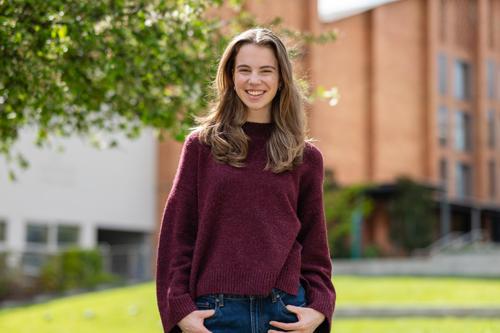
Recent IB graduate Madeleine McGregor (2025) is currently studying at the University of Melbourne.
For Madeleine, both TOK and the Extended Essay were key areas of interest, and she was keen to continue her co-curricular involvement at the College.
“I liked the CAS as I was already doing lots of activities that I wanted to continue,” Madeleine explains. “With the IB, that’s almost mandatory.”
Alumna Betty Zhang (2018), now Investment Principal at Boson Ventures, always knew the IB was the right fit for her.
“The IB was one of the biggest reasons behind my decision to attend MLC,” she explains. “I looked forward to the breadth and depth the curriculum offered, and the opportunity to dive deep into subjects I was passionate about.”
For many MLC students, the IB also stands out because of the way it connects disciplines and supports independent learning.
“I chose this pathway because I wanted an education that didn’t simply ask me to memorise facts, but to understand why things work the way they do across different contexts,” reflects alumna Gabriella Karge (2005), now Global Alliance Director at CBRE. “The IB gave me permission to be curious across disciplines.”
The IB creates a learning environment where students can be both focused and exploratory, pursuing depth while maintaining a wide perspective.
While the IB is academically rigorous, it is also deeply collaborative. Students are part of a cohort that supports one another through shared challenges and achievements.
“I found the experience intellectually stimulating,” says Betty. “The cohort experience was really special too. IB girls supported one another.”
This sense of connection is reinforced by strong relationships with teachers – experienced specialists who challenge and guide students while encouraging independence.
“My teachers at MLC were so dedicated. They challenged me, but they also encouraged me to act with agency, take real responsibility for my own learning,” Betty shares.
For Madeleine, this support was just as important as the academic aspects of the IB.
“The teachers were absolutely incredible. They were so good at checking in,” she says, describing the experience as one grounded in genuine care.
The benefits of an IB education extend far beyond the classroom. Graduates develop the habits and capabilities needed not just to succeed at university, but to thrive in increasingly complex and global careers.
“Universities consistently tell us that IB graduates arrive ready to think independently, contribute to discussion and manage the demands of tertiary study from day one,” says Principal Julia Shea.
This readiness comes from the way the IB develops students as learners, building their confidence in their voice and their capacity for communication and collaboration.
“In my career, the ability to collaborate across cultural lines, synthesise information quickly, and present ideas with clarity has repeatedly set a strong foundation,” says Gabriella.
Betty credits the programme’s emphasis on critical thinking and inquiry with supporting both her university studies in immunology and her transition into venture capital.
The IB is recognised by universities across Australia and internationally, opening pathways across the globe.
“The programme gave me the flexibility to know that I could study overseas,” says Eleanor Doig (2010), who later studied in Switzerland and the Netherlands.
“The IB Diploma set me up with a global perspective which has shaped my career.”
The IB helped Madeleine solidify her passion for science and shape her future direction. Now studying a Bachelor of Science at the University of Melbourne, she continues to draw on the mindset she developed through the programme.
“I wake up each day looking forward to opportunities for intellectual growth,” she says. “More than anything, I hope to continue discovering what genuinely motivates and fulfils me.”
Her journey reflects what the IB at MLC is designed to do – not just prepare students for exams, but equip them to thrive in a complex, evolving world.


(Left to right) Betty Zhang (2018), Investment Principal at Boson Ventures; Eleanor Doig (2010), Assistant Director, Pacific Division, Australian Government Department of Defence; Gabrielle Karge (2005), Global Alliance Director at CBRE.