
How MLC's VCE Core Develops Future-Ready Learners
August 5th, 2026

August 5th, 2026
‘As a teacher and a mother of two girls, I often think about what I want my students and my own children to know when they finish school,’ reflects Jess Hergott, VCE Core Leader. ‘I realise it’s not just about what they will know, but what they are equipped to do in a constantly changing world.’
MLC aims to prepare girls to step into the world as active, capable citizens: young people who question, create and act. To support this, the College intentionally develops the skills students need to succeed and lead, including through the Year 11 VCE Core, a year-long compulsory subject for all VCE students.
The year begins with the big picture, helping students understand the purpose of the subject and why the skills they will develop matter for both their current lives and their future pathways.
‘We unpack the elements of each skill using research-based rubrics,’ explains Jess. ‘We do this because development improves far more when the girls know what the skills are, can recognise them in practice, and understand why they matter.’
Practical activities centred on each of three core skills are also completed:
- For communication, understanding how to effectively participate in small‑group discussions by speaking clearly, listening actively, using evidence, respecting others’ ideas, and making sure everyone has the chance to contribute.
- Within critical thinking, exploring concepts such as recognising confirmation bias, practising intellectual humility, checking sources, and avoiding common fallacies.
- In creative thinking, learning how the brain generates ideas and explore strategies to train their own thinking.
Students are supported to identify these skills in themselves. Using a bespoke assessment tool unique to MLC and co-designed with La Trobe University, students complete a self‑assessment questionnaire which provides a personalised snapshot of their strengths and areas for growth.
Goals are set at the end of Term 1 based on their self-assessment results, highlighting areas for growth and outlining actions to improve.
“Reflecting the principles of a growth mindset, activities and goal setting reinforce that skills are not fixed – they can be actively developed over time, with self-awareness and practice,” explains Jess.
These goals are revisited at the end of the year where students track their progress with another self-assessment.
“We also provide workshops centred on maximising their level in each skill and enhancing their exam‑preparation techniques,” says Jess.
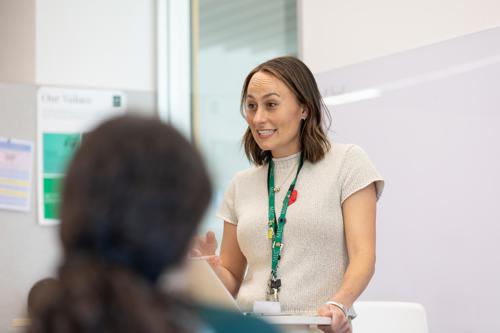
VCE Core Leader, Jess Hergott.
Students explore real-world issues with skill development embedded in learning tasks designed around contemporary social and global topics.
‘This was designed to meet a desire from students to be more informed about present-day issues,’ says Jess.
Alongside reading, research and reflection, guest speakers with lived experience on each topic strengthen real‑world connection. After each session, students review the speaker’s message and analyse how effectively they communicated their ideas, which then links back to the skills they are developing.
‘The aim is not only to inform students about major contemporary issues,’ explains Jess. ‘But to develop critical thinking as they evaluate sources by questioning reliability, identify biases, compare perspectives, and make evidence based judgments.’
Students also identify organisations that support people affected by the issues they’ve explored and think creatively about how they can contribute – whether by supporting those organisations or initiating their own independent action.
‘Excitingly, this year students will also take on a Service‑Learning Action Project, to see firsthand how their efforts can create positive change,’ says Jess. ‘We focus on where progress is being made, and how they can be part of that.”
‘The question we keep asking is: what are we doing that is making a difference, and what might we do next? Small, intentional steps matter. Over time, they shape students into curious, capable and ethical young people – ready to engage thoughtfully with the world.’

Guest speakers for VCE Core: Mursal Sadaat, a member of the Afghanistan Women’s National Soccer team and human rights advocate.

Guest speakers for VCE Core: Kit McMahon (1989), CEO, Women’s Health in the South East and Director of Tradeswomen Australia.

Guest speakers for VCE Core: Tim Johnston, CEO and Founder of Powrhouse.